The games that came before
Thirty years of building things people play.
On the about page I said I have been making games a long time. This is the receipt. Some of these are older than a lot of the couples I build for now. The tools changed enormously between a 1994 Macintosh and a full height arcade cabinet, but the part I actually care about never did: making something a person picks up and instantly knows how to play.
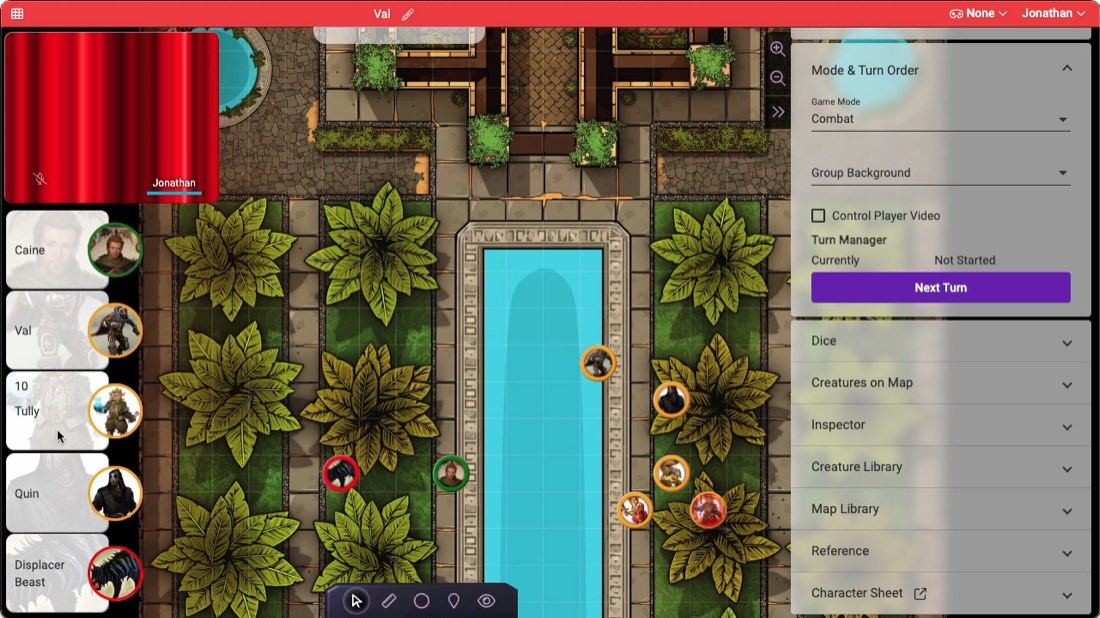
Tabyltop in a live combat session, tokens, video, and the game-master panel.
Tabyltop
Most recently, I was lead UX/UI designer and a product co-creator on Tabyltop, a virtual tabletop for playing roleplaying games with friends over the internet. It was an 18 month effort to solve one stubborn problem: most tools are either so complex they eat an evening in setup, or so simple they lose everything that makes playing in person feel good.
We shaped it across 60 plus live play sessions, with video and character presence built in so a remote table still feels like a table.
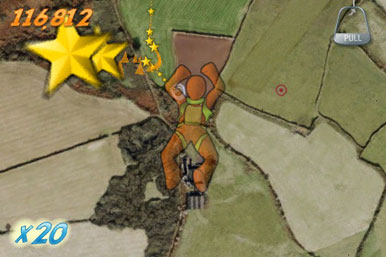
Freefall'n on the iPhone, 2009. Tilt to steer, grab stars, pull the chute, stick the landing.
Freefall'n
When the App Store was new, I shipped an iPhone game under a second small label, BunsenTech. You tilt the phone to steer a skydiver down through rings and stars, then grab a red star to pop the parachute and land on target, across easy, medium, and expert modes.
Macworld reviewed it and called it "a fun but repetitive skydiving game," which, honestly, is a fair review of skydiving too.
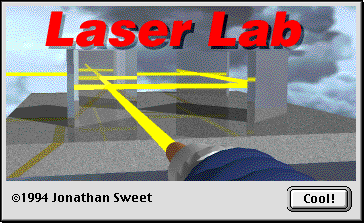
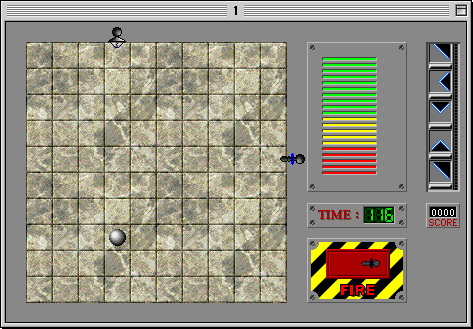
Title screen and the board. Signed, again, "©1994 Jonathan Sweet."
Laser Lab
A puzzle game from the same Modified Environments year as Bunny Killer 3. You arrange mirrors and prisms on a 10 by 10 grid to bend a laser through the targets and back to a collection point, against the clock. It sits in the Tetris and Pipe Dream family of quick-thinking puzzlers, without being one more Tetris clone.
Like the others, it outlived its floppy disk: still archived and playable today.
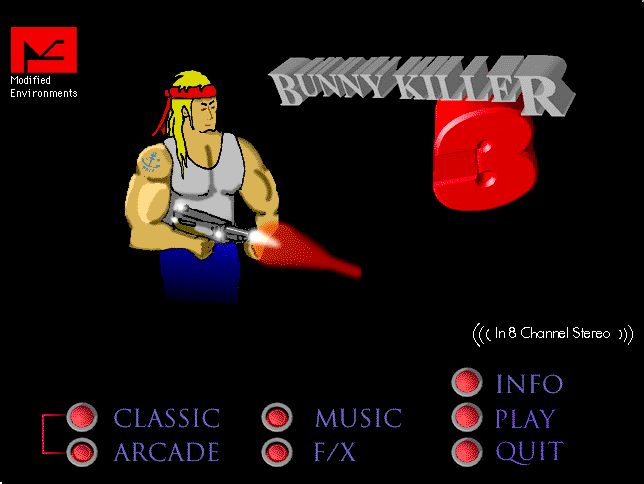
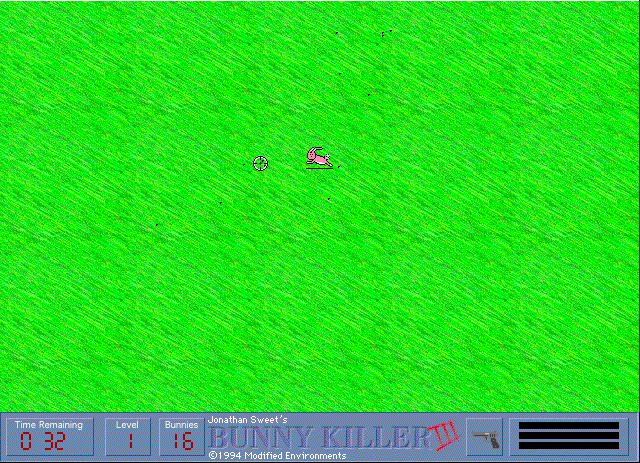
Title screen and gameplay. That status bar reads "Jonathan Sweet's Bunny Killer III."
Bunny Killer 2 & 3
My first published games, written for the Macintosh and sold under my own one-person label, Modified Environments. The premise was exactly as refined as you would expect from the 1990s: an asteroid of unknown origin crashes nearby, sends hundreds of bunnies stampeding toward your fields, and you grab your sling to defend the crops. Bunny Killer 2 shipped in 1993, Bunny Killer 3 in 1994, in glorious 8 channel stereo.
Three decades later, other people still keep them alive: both are archived, credited, and playable on classic Mac emulators today.
There is other work in between the games: Dynolicious, an early iPhone app that turned the phone's accelerometer into a car performance meter, got written up in Car and Driver back in 2008. But the thread through all of it is the same one that runs through the wedding cabinets. Build the thing yourself, make it feel good in someone's hands, and sweat the details nobody is contractually obligated to notice.
Which is a long way of saying: The Wedding Game Factory is not where I started making games. It is just the most personal place it has ended up.